How 3D Imaging Enhances Your Oral Surgery Experience

Modern oral surgery relies on advanced technology to deliver safer, more predictable, and more comfortable care. One of the most significant advancements in recent years is 3D imaging, a tool that allows oral surgeons to visualize your teeth, jaw, and facial structures with remarkable detail. This technology provides information that traditional X-rays simply cannot capture, making diagnosis and treatment more accurate than ever.
At Bergen Oral & Maxillofacial Surgery, 3D imaging is incorporated into many treatment plans to ensure precision, efficiency, and a superior patient experience. By using state-of-the-art digital scanners, our surgeons can diagnose issues more clearly, plan procedures with confidence, and reduce the number of visits required for your care.
Key Takeaways:
- 3D imaging provides highly accurate, detailed views of your mouth and jaw.
- It improves diagnosis, treatment planning, and implant precision.
- Patients benefit from fewer visits, less radiation, and clearer communication.
- Bergen Oral & Maxillofacial Surgery uses this technology to deliver safer, more personalized care.
What Is 3D Imaging?
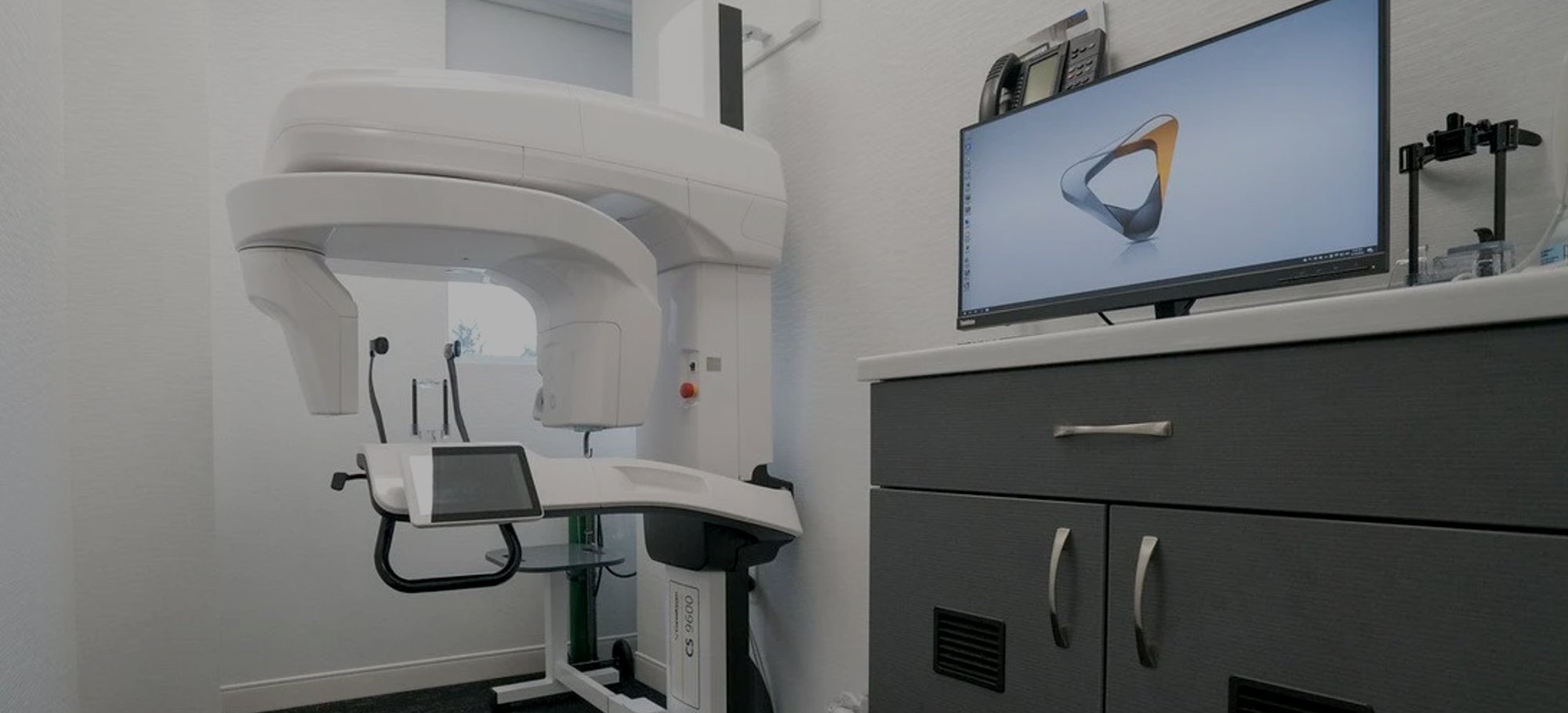
3D imaging uses advanced digital scanners or lasers to capture thousands of data points from multiple angles. These images come together to form a highly detailed, three-dimensional model of your teeth, jaw, and surrounding structures.
Unlike traditional two-dimensional X-rays, 3D scans display depth, angles, bone density, and fine details that are essential for accurate surgical planning. The result is a complete, interactive digital map of your mouth.
How Does 3D Imaging Improve Diagnosis?
With a precise 3D model, oral surgeons can evaluate your teeth and jaw with far greater accuracy.
This enhanced view helps them:
- Pinpoint the source of discomfort
- Identify conditions that may be hidden in standard X-rays
- Understand the relationship between teeth, nerves, and bone
- Evaluate bone quality and thickness
More clarity means fewer surprises during treatment—leading to better results and smoother recovery.
Why Is 3D Imaging Essential for Dental Implant Planning?
Placing a dental implant requires exact positioning within the jawbone. The depth, angle, and bone density must be carefully measured to ensure long-term success.
3D imaging allows surgeons to:
- Map the exact location of nerves and sinuses
- Determine ideal implant placement
- Measure the strength and volume of the jawbone
- Predict potential challenges before surgery
This precision greatly improves implant success rates and patient outcomes.
Does 3D Imaging Enhance Patient Understanding?
For many patients, traditional X-rays are difficult to interpret.
3D imaging changes that experience.
Surgeons can now rotate, enlarge, and highlight areas of concern directly on the screen—making it easier to understand your diagnosis, the treatment plan, and how surgery will resolve your issue. Clear visuals lead to better communication and more confident decision-making.
Fewer Office Visits, More Efficiency
Once a 3D scan is captured, it can be used repeatedly for diagnosis, planning, and follow-up. Many steps that once required multiple visits can now be consolidated into fewer appointments.
Digital scans also expose patients to less radiation than traditional imaging, making this technology safer and more convenient.
Experience Advanced Care at Bergen Oral & Maxillofacial Surgery
At Bergen Oral & Maxillofacial Surgery, we combine advanced technology with compassionate, patient-centered care. Our surgeons use 3D imaging to enhance the accuracy of procedures such as dental implants, wisdom tooth removal, jaw surgery, and more.
For more than 70 years, our practice has been serving Bergen County with patient-centered expert oral care. Our four convenient locations in Franklin Lakes, Hackensack, Ridgewood, and Westwood have received a combined 2,000+ Google reviews—and an average rating of 4.9 stars.
Personalized, gentle, comprehensive patient care is our number one priority.
3D Imaging (FAQ)
Is 3D imaging safe?
Yes. 3D imaging emits lower radiation levels than traditional X-rays and is considered extremely safe for patients of all ages.
Does 3D imaging hurt?
No. The scan is fast, comfortable, and entirely noninvasive. You simply sit or stand while the scanner rotates around your head.
How long does a 3D scan take?
Most scans take less than one minute to complete. The digital model is produced almost immediately.
Do all patients need 3D imaging?
While not required for every case, 3D imaging is highly beneficial for implants, extractions, impacted teeth, jaw surgery, and complex diagnostic needs.
Will I need multiple scans?
In most cases, one scan provides sufficient information for diagnosis and treatment planning. The digital file can be reused for future visits as needed.