
What Age Do Wisdom Teeth Come In?
One day your mouth feels completely normal. Next, there’s a strange pressure building at the back of your jaw — and suddenly you have a lot of questions. Wisdom teeth have a way of showing up unannounced, and for most people, the experience raises more uncertainty than pain.
The problem is that ignoring the early signs doesn’t make them go away. What starts as mild pressure can quietly turn into impaction, infection, shifting teeth, or cysts forming around a stuck molar — all of which are significantly harder to treat the longer they’re left alone.
Understanding what’s actually happening makes the whole thing far less stressful.
Here’s what this guide covers:
- The typical age range when wisdom teeth come in
- The signs that yours are emerging — and what to watch for
- The difference between an erupted and an impacted wisdom tooth
- When to see an oral surgeon instead of your general dentist
- What wisdom tooth removal actually looks like today
When Do Wisdom Teeth Come In?
Wisdom teeth typically emerge between the ages of 17 and 25 — though timing varies significantly from person to person.
According to the American Dental Association, this late-teen-to-early-twenties window is when most people see their third molars emerge. Some develop them earlier, some later, and a small percentage never develop them at all. Every one of those outcomes is completely normal.
What creates the problem isn’t the teeth themselves — it’s the space they’re trying to fit into:
- Most adults grow 32 teeth, but the average mouth comfortably holds 28
- When the last four molars try to squeeze in, there often isn’t enough room
- The result is crowding, angled growth, or teeth that get stuck beneath the gumline entirely
Learn more about How Many Teeth Do Adults Have?
Timing comes down to genetics, jaw size and shape, and whether there’s space for the teeth to come in straight. The good news: a dental X-ray can spot wisdom teeth developing in the jaw years before they break through the gums — which is exactly why early evaluation matters far more than waiting for pain.
What Are the Signs That Wisdom Teeth Are Coming In?
The most common early sign is pressure or tenderness at the very back of the mouth — often just behind the last molar.
Some people feel it building gradually over weeks. Others notice it almost overnight. Watch for:
- Jaw pain or pressure near the back of the mouth
- Swollen or tender gums behind your last molar
- Headaches or earaches around the jaw area
- Difficulty fully opening your mouth
- Swelling in the jaw or cheek
- Persistent bad breath or an unpleasant taste that won’t go away — often a sign of infection
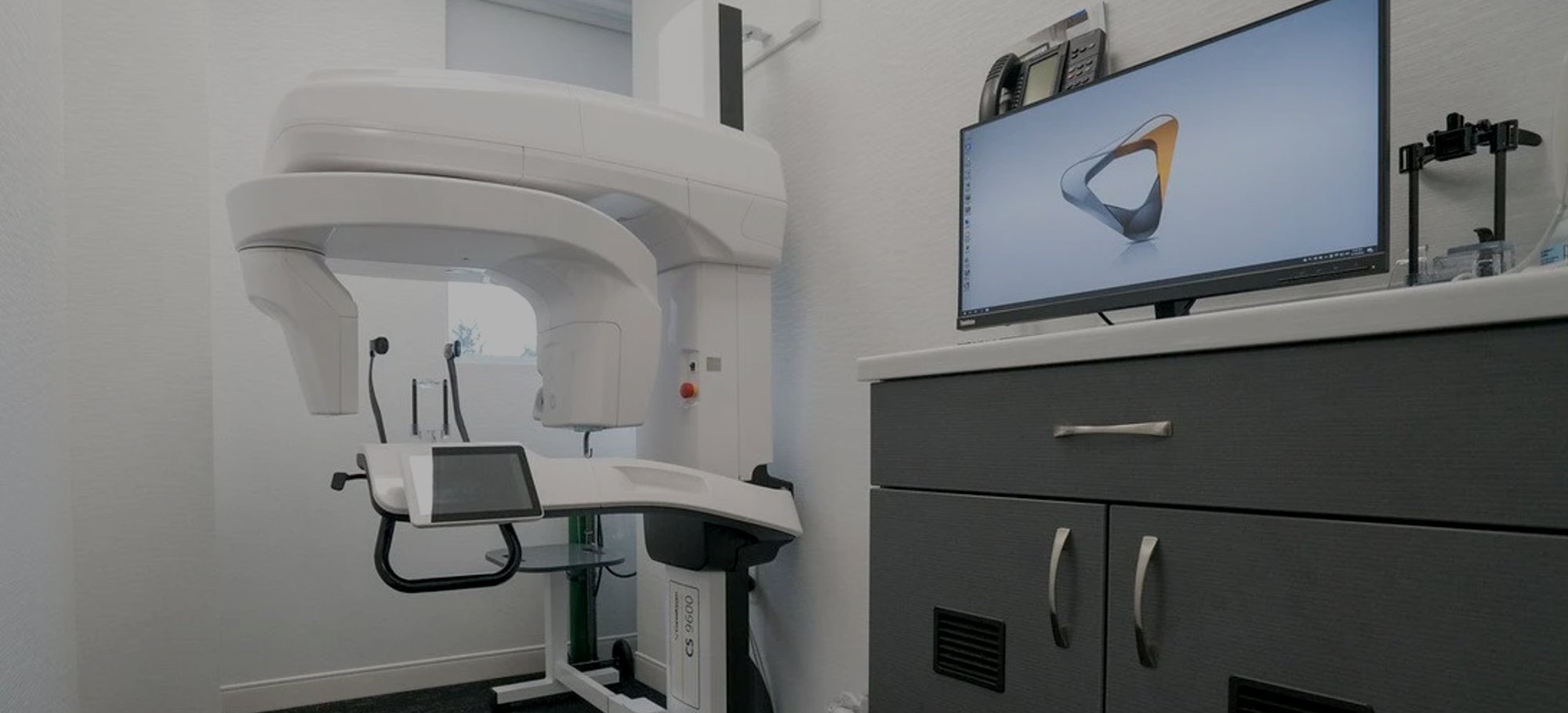
One important note: not everyone feels anything at all. Plenty of people have wisdom teeth developing under the surface with zero symptoms — which is exactly why a routine panoramic X-ray matters. It catches what your jaw won’t tell you.
Read more about Why Are My Gums Swollen Around My Wisdom Teeth?
Impacted vs. Erupted: What’s the Difference?
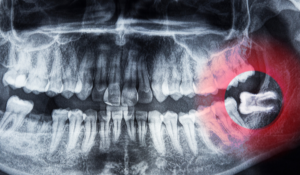
An erupted wisdom tooth has broken through the gumline. An impacted one is fully or partially trapped beneath it — with no clear path to come in.
Read more about the Types of Impacted Wisdom Teeth.
Impacted wisdom teeth are the ones most likely to cause pain, infection, and pressure on the healthy teeth next door. Here’s how the two situations compare:
| Erupted Wisdom Tooth | Impacted Wisdom Tooth | |
|---|---|---|
| Position | Has broken through the gumline | Fully or partially trapped beneath the gum |
| Symptoms | Mild pressure, tenderness during eruption | Persistent pain, swelling, jaw stiffness |
| Infection risk | Lower if properly cleaned | Higher — hard-to-reach area traps bacteria |
| Crowding risk | Possible if space is limited | Likely — pushes against adjacent teeth |
| Typical treatment | Monitor or remove if crowding occurs | Removal usually recommended |
| Urgency | Evaluate early | Evaluate promptly |
Catching an impacted tooth early makes a meaningful difference. A straightforward evaluation now is far easier — and far less costly — than a complicated procedure after problems have had time to develop.
Contact Bergen Oral & Maxillofacial Surgery for a same day wisdom tooth evaluation.
Do All Wisdom Teeth Need to Be Removed?
Not necessarily. Many wisdom teeth can simply be monitored — but impacted teeth rarely resolve on their own.
When a wisdom tooth has room to come in straight and can be kept clean, removal may not be immediately necessary. Your oral surgeon will evaluate the position, the available space, and the risk to neighboring teeth before making a recommendation.
Removal is typically recommended when:
- The tooth is fully or partially impacted with no clear eruption path
- There are recurring signs of infection around the gum tissue
- The wisdom tooth is pushing against adjacent molars and causing crowding
- A cyst or other pathology is developing around the unerupted tooth
- The position makes the tooth impossible to keep clean long-term
Learn more about a Complicated Tooth Extraction: What You Need to Know.
When to See an Oral Surgeon — Not Just Your Dentist
Your general dentist is a great first set of eyes. But when it’s time to remove wisdom teeth — especially in complex or impacted cases — that’s where a board-certified oral surgeon’s training matters.
Situations that call for an oral surgeon consult:
- A wisdom tooth that is impacted or only partially erupted
- Signs of infection that keep returning
- Teeth positioned close to a nerve, where precision is critical
- Multiple extractions planned for the same visit
- Any case where sedation beyond local anesthesia is preferred
The American Association of Oral and Maxillofacial Surgeons (AAOMS) recommends that impacted third molars be evaluated by an oral and maxillofacial surgeon — and that’s exactly the specialized assessment Bergen Oral & Maxillofacial Surgery provides every day.
Schedule a wisdom tooth evaluation at Bergen Oral Surgery.
What Wisdom Tooth Removal Actually Looks Like Today
Modern wisdom tooth removal is far gentler and more comfortable than its reputation — and most patients are back to their normal routine within a few days.
If the word “surgery” is what’s been keeping you from making the call, here’s what the process actually looks like:
- The area is numbed before anything begins — you won’t feel the procedure
- Sedation options include local anesthesia, nitrous oxide, IV sedation, and general anesthesia — your surgeon helps you choose the right level for your case and your comfort level
- The procedure itself is typically completed in under an hour for most cases
- Recovery for most patients involves a few days of soft foods, rest, and basic aftercare instructions
- Bergen’s team checks in after your procedure — care doesn’t stop when you leave the chair
For nervous patients, sedation is often the turning point. IV sedation in particular allows most patients to have no memory of the procedure at all — they close their eyes and it’s over.
Learn more about What Sedation is Used for Wisdom Teeth Removal?
Get Clear Answers About Your Wisdom Teeth at Bergen Oral Surgery
Wisdom teeth are unpredictable, the warning signs aren’t always obvious, and waiting tends to make things harder — not easier. What most patients need isn’t reassurance that everything is probably fine. They need a clear answer from someone qualified to give one.
For more than 70 years, Bergen Oral & Maxillofacial Surgery has provided that clarity to patients across Bergen County and nearby communities including Rockland County, NY. Their dual-degree surgeons combine medical and dental expertise to evaluate and treat even complex third molar cases with precision — protecting both your oral health and the healthy teeth around it.
Call or text (201) 477-2667, or request an appointment online.
Doctor-Owned. Doctor-Directed. Patient-Centered Care You Can Trust.
Frequently Asked Questions About Wisdom Teeth
Can wisdom teeth come in after 30?
Yes — late eruption is uncommon but it happens. A panoramic X-ray or CBCT scan will show exactly what’s going on. Don’t assume you’re too old to be dealing with wisdom teeth.
How do I know if my wisdom tooth is infected vs. just sore?
A normal eruption feels like pressure and mild swelling that comes and goes. Infection feels different — fever, a persistent bad taste, or swelling spreading to the cheek or jaw. If you’re seeing those signs, get seen promptly.
Is it safe to have all four wisdom teeth removed at once?
In most cases yes — and it’s often the preferred approach since it means one recovery period instead of several. Your surgeon will evaluate your case before recommending whether to remove them all at once or in stages.
What’s the difference between an oral surgeon and a dentist for wisdom tooth removal?
A dentist can handle straightforward extractions. Oral and maxillofacial surgeons are specifically trained for the harder cases — impaction, sedation, and teeth positioned near nerves. Bergen’s surgeons bring that specialized training to every case.
Will my insurance cover wisdom tooth removal?
Coverage varies by plan, but many policies cover medically necessary extractions. Bergen’s in-house billing team helps you maximize your benefits, submits claims on your behalf, and is upfront about any out-of-pocket costs — no surprises.