All-on-4® Dental Implants for Seniors: What to Expect From Same-Day Teeth

Reviewed by Dr. Mina Boulos, DMD, MD
Why Seniors Choose Bergen Oral & Maxillofacial Surgery for All-on-4
You have lived with the daily math of dentures long enough to know it by heart. The adhesive that never quite holds through a meal. The foods you have quietly stopped ordering. The soaking cup by the sink, and that small self-conscious pause before you laugh in a room full of people. None of that is a character flaw or something to apologize for. It is simply what missing teeth and ill-fitting dentures ask of you, every single day.
For many seniors well into their 70s and 80s, All-on-4® dental implants have changed that daily experience entirely. Same-day teeth have become a clinically appropriate, long-term option for healthy older adults, and candidacy comes down to your specific health picture, your bone structure, and a proper surgical evaluation far more than your age.
The oral surgeons at Bergen Oral & Maxillofacial Surgery bring a rare qualification to that evaluation. Several of Bergen Oral Surgery’s surgeons on the team hold two doctorates, one in dentistry and one in medicine, so a senior’s full health history gets read with real medical depth before anyone places a single implant.
Key Takeaways
- All-on-4 replaces a full row of teeth with four strategically placed implants, and in most cases a temporary set of fixed teeth goes in the same day as surgery.
- Age alone does not disqualify anyone. Seniors in their 70s and 80s routinely complete successful All-on-4 procedures when their overall health supports it.
- Bone loss, one of the most common senior concerns, does not automatically rule you out. The angled-implant design often works with reduced bone density and can eliminate the need for bone grafting.
- Medicare does not cover dental implants in most cases, though financing exists and the ten-year cost comparison against dentures surprises many patients.
- Recovery for most seniors means 7 to 10 days of real rest, followed by a soft-food diet for roughly 8 to 12 weeks while the implants fuse with the jaw.
- Bergen’s dual-degree, board-certified surgeons weigh every case with both medical and dental expertise, which matters most in complex senior candidacy.
What Are All-on-4 Dental Implants, and What Does “Same-Day Teeth” Actually Mean?
All-on-4 is a full-arch tooth replacement. Four implants, placed at carefully chosen angles, support a complete fixed set of teeth across the upper jaw, the lower jaw, or both. Most patients walk out of the surgical appointment with a temporary set of teeth that same day.
Here is how it works:
- Four implants per arch, positioned to make the most of the bone you have
- Two straight implants toward the front and two angled implants toward the back, since that angled placement is what lets All-on-4 succeed with less bone than traditional implants need
- A fixed prosthetic that attaches to those implants and stays put, unlike a removable denture
The language is where people usually get tripped up. “Same-day teeth” refers to the temporary fixed prosthetic your surgeon attaches at the time of surgery. It is a real set of fixed teeth, and it does not come out, but it is built for the healing phase. Your permanent restoration, usually zirconia or acrylic, is placed later, once the implants have fully fused with the bone. For most seniors, that final step happens about three to four months after surgery.
| Traditional Dentures | All-on-4 Implants | |
|---|---|---|
| Removable | Yes, removed daily | No, fixed permanently |
| Bone loss over time | Accelerates bone loss | Stimulates bone like natural teeth |
| Stability | Adhesive-dependent | Implant-supported, no movement |
| Eating ability | Restricted, many foods avoided | Significantly restored, most foods possible |
| Maintenance | Daily removal and cleaning | Brush and floss like natural teeth |
| Long-term cost | Ongoing, replacements every 5 to 7 years | Higher upfront, lower long-term |
| Feel | Foreign object in the mouth | Much closer to natural teeth |
Are Seniors Good Candidates for All-on-4 Dental Implants?
Yes. Age by itself is not a disqualifying factor. Seniors in their 70s and 80s complete successful All-on-4 procedures on a regular basis when their overall health and bone structure support surgery.
Plenty of seniors arrive at Bergen Oral & Maxillofacial Surgery after a general dentist told them they were not a candidate, often without a full surgical evaluation behind that opinion. A dual-degree oral surgeon can assess medical complexity that a general dental office is simply not equipped to weigh, and that difference changes the answer for a lot of patients.
Learn more about Candidacy For Dental Implants.
Can You Get Dental Implants if You Have Bone Loss?
The All-on-4 technique was built specifically for this problem. Its angled back implants reach denser bone that standard implant placement cannot, which often removes the need for bone grafting altogether.
Bone loss is the single most common concern among seniors, and the one most often misunderstood. Traditional implants need significant bone volume, which years of denture wear tend to erode.
The angled implants in All-on-4 bypass the areas of heaviest bone loss and anchor into the denser bone at the front and sides of the jaw.
Many patients who were told they needed extensive grafting, or that implants were off the table entirely, turn out to be candidates without grafting at all.
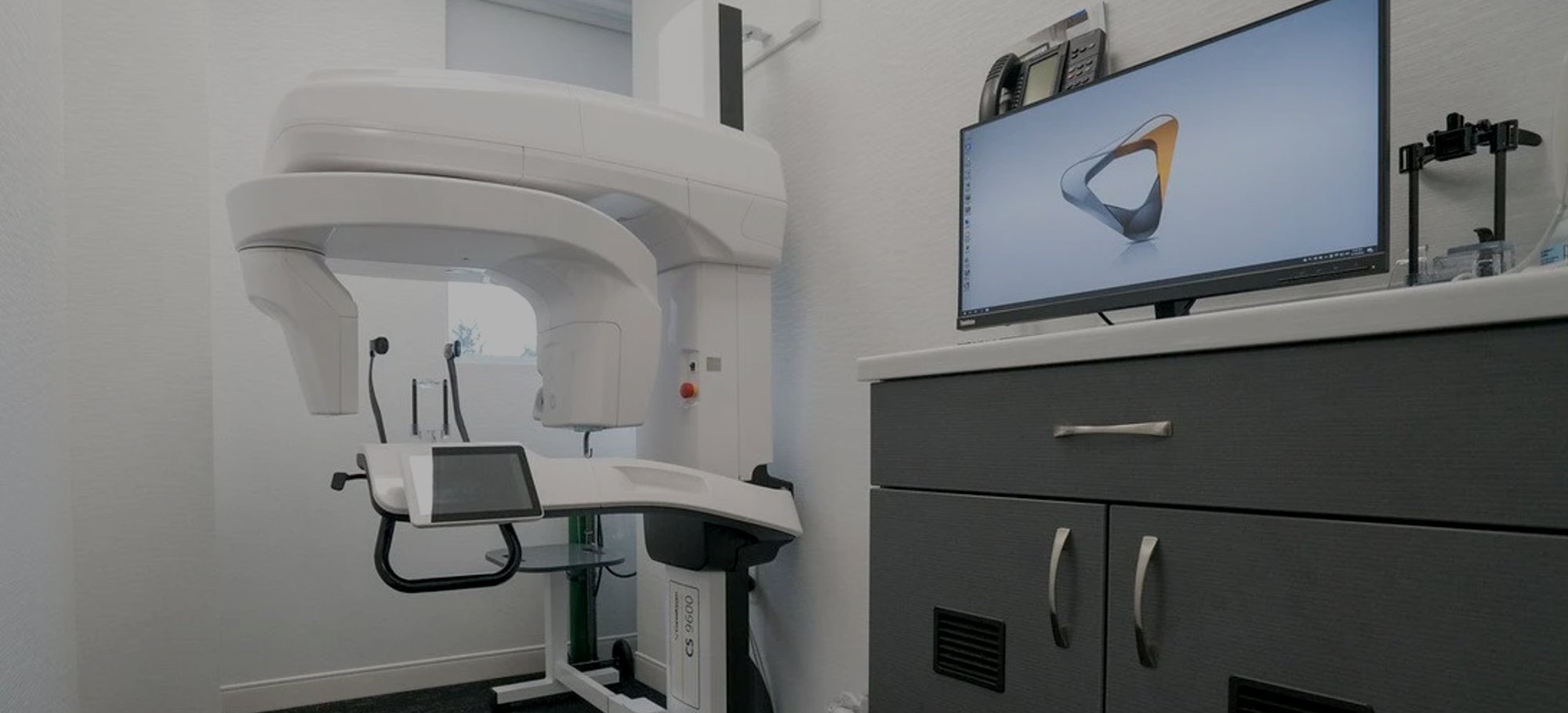
A 3D CBCT scan during Bergen’s surgical evaluation measures your available bone precisely.
Read more about Getting Dental Implants with Bone Loss.
What Health Conditions Affect All-on-4 Candidacy for Seniors?
Most common senior health conditions do not close the door on All-on-4. They do call for careful evaluation by a surgeon with medical training, not dental training alone. Here is how Bergen Oral & Maxillofacial Surgery’s team approaches the conditions that come up most often.
- Diabetes: Well-managed blood sugar supports healing, so controlled diabetes is generally compatible with implant surgery. Uncontrolled diabetes raises infection risk and slows healing, which is why Bergen’s surgeons review your HbA1c as part of the pre-surgical medical workup.
- Osteoporosis and bone medications: Bisphosphonates such as Fosamax, Boniva, and Reclast, along with other bone-modifying medications like Prolia, affect bone metabolism and in rare cases, can complicate jaw surgery.
- Blood thinners: Warfarin, aspirin, Plavix, Eliquis, and Xarelto all require coordination with your prescribing physician before surgery. Bergen’s medical training means that coordination happens with real clinical sophistication.
- Heart disease: With cardiology clearance and appropriate pre-surgical planning, heart disease is not an automatic disqualifier.
- Smoking and vaping: Both meaningfully raise the risk of implant failure, so Bergen’s team folds cessation support into pre-surgical planning.
Learn more about Blood Thinners and Oral Surgery: What You Need to Know.
If you have specific questions on insurance, please visit our patient information page regarding insurance coverage or call our team at (201) 477-2667 for more information.
What Happens During All-on-4 Surgery at Bergen Oral & Maxillofacial Surgery?
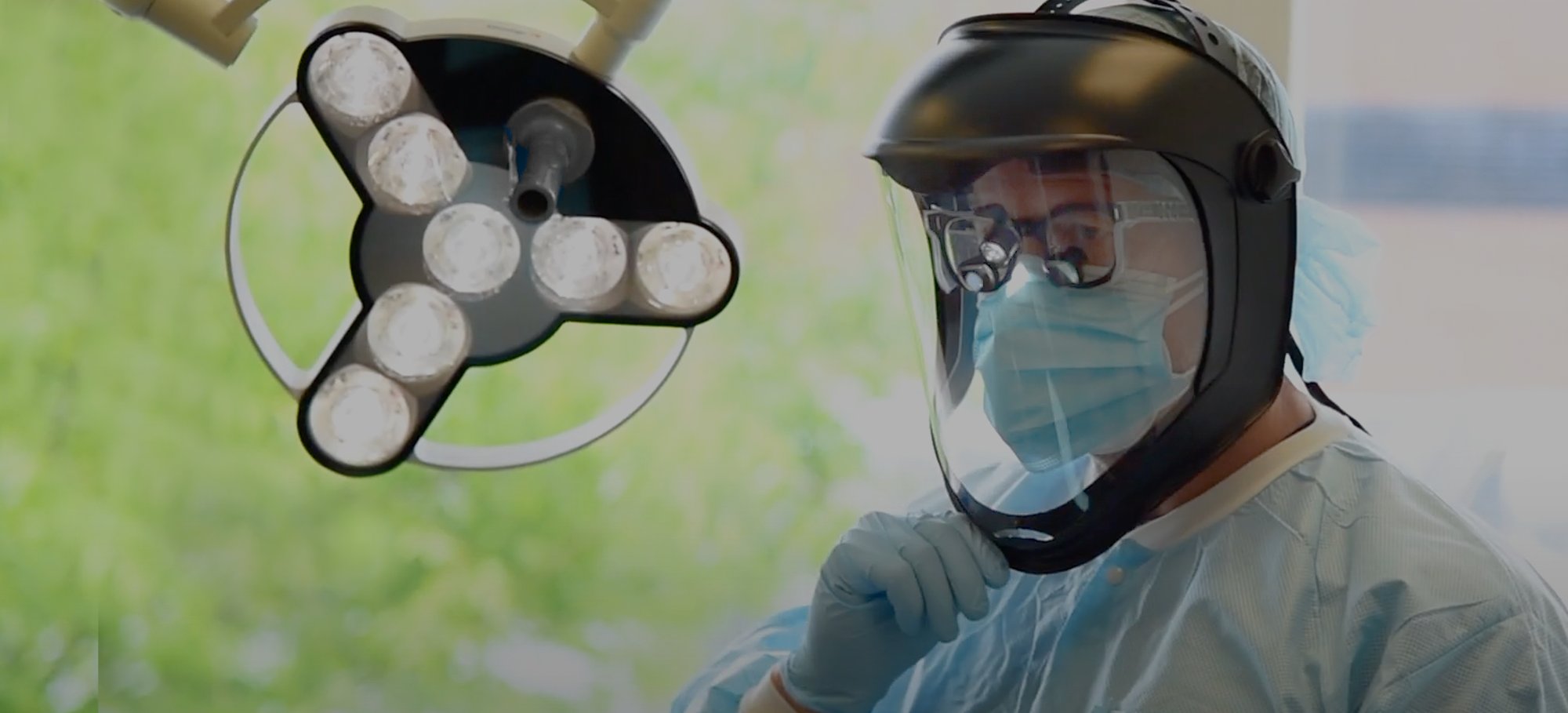
All-on-4 surgery happens in a single appointment, usually 3 to 5 hours per arch, with anesthesia options that keep you comfortable no matter how much dental anxiety you carry into the room. Bergen’s in-office surgical capability is a real advantage here, because most seniors never need a hospital visit for the procedure.
Step by step:
- Pre-surgical evaluation. This includes 3D CBCT imaging, a medical history review, and full treatment planning.
- Anesthesia. Bergen offers IV sedation and general anesthesia in-office. Most seniors choose IV sedation, which produces a deeply relaxed state with little or no memory of the procedure. Because Bergen’s dual-degree surgeons are certified to administer every level of anesthesia in-office, most cases require no hospital at all.
- Extraction of any remaining teeth, if needed.
- Implant placement. Four implants per arch go in at the precise angles the 3D scan mapped out.
- Temporary teeth attached. The temporary fixed prosthetic goes on, so you leave with teeth.
- Post-operative plan. You receive post-op instructions and a pain management plan before you head home.
- A driver home. Arrange for a trusted family member or friend to accompany you and drive you home.
Read our blog on the entire All-on-4 surgery process.
All-on-4 Recovery for Seniors: A Realistic Week-by-Week Timeline
Recovery from All-on-4 is manageable for most healthy seniors, though it does ask for planning, honest expectations, and solid support at home during that first week. Here is a realistic look, with no sugarcoating, because knowing what is coming is what makes it easier to handle.
| PRF Bio-Filler | Synthetic HA Filler | |
|---|---|---|
| Material | Your own blood — no synthetic gels | Manufactured hyaluronic acid gel |
| Allergic reaction risk | Very low — autologous material | Low — but possible with synthetic materials |
| Volume onset | Immediate, subtle | Immediate, can be more pronounced |
| Collagen stimulation | Yes — growth factor release continues for weeks | No — fills space only |
| Results timeline | Gradual improvement over weeks | Visible immediately |
| Longevity | Several months — varies by patient | 6–18 months depending on product |
| Reversible | No | Yes — dissolvable with enzyme |
| Best for | Natural rejuvenation, skin quality improvement | Immediate or more significant volume restoration |
What sets Bergen apart for senior All-on-4 patients:
- Dual-degree medical and dental surgeons. Bergen’s surgeons hold both dental and medical doctorates, so they evaluate senior candidates with the medical depth that complex health histories demand. A general dentist cannot perform that level of medical assessment.
- An in-office surgical suite. Bergen performs All-on-4 in a fully equipped surgical suite, with IV sedation and general anesthesia available without a hospital referral, which keeps the process simpler for senior patients.
- More than 70 years in Bergen County. Bergen has cared for patients across Bergen County and nearby Rockland County, NY for over seven decades, and that history shows up as trust.
- Hospital affiliations. For patients whose medical histories call for hospital-level oversight, Bergen holds affiliations with Columbia University Medical Center and Hackensack University Medical Center.
- Thousands of five-star reviews. More than 2,000 five-star Google reviews, many of them from seniors whose daily lives changed after All-on-4.
- Same-day emergency care. Bergen Oral & Maxillofacial Surgery offers same-day emergency dental services at all four locations, seven days a week.
Trusted by dentists and patients for over 70 years, Bergen’s dual-degree oral surgeons will give you an honest answer about whether All-on-4 is right for you, complex health history and all. Schedule an All-on-4 consultation at Bergen Oral & Maxillofacial Surgery.
FAQs
Are dental implants safe for seniors?
Yes. Age by itself is not a disqualifying factor. Seniors in their 70s and 80s routinely undergo successful All-on-4 procedures when their overall health supports surgery. Bergen’s dual-degree surgeons evaluate complex health histories, including diabetes, osteoporosis, and blood thinners, with a high level of medical and dental expertise.
Is there an age limit for dental implants?
No upper age limit applies. The deciding factors are overall health, bone density, and medical history rather than age. A thorough surgical evaluation with 3D imaging and a medical history review determines candidacy far more accurately than age.
Should an 80-year-old get dental implants?
That depends on their health and bone structure rather than their age. Many 80-year-olds make excellent All-on-4 candidates. Bergen’s dual-degree surgical team evaluates each patient individually, weighing medical history, bone density, and health conditions to decide whether implants are safe and appropriate.
How long does All-on-4 recovery take for seniors?
Most seniors feel significantly better within 7 to 10 days of surgery. A soft-food diet continues for 8 to 12 weeks during osseointegration, and the permanent teeth are placed roughly 3 to 4 months after surgery. Seniors may heal a little more gradually than younger patients, and Bergen’s post-surgical monitoring accounts for that.