
What Does Healthy Tooth Extraction Healing Look Like?
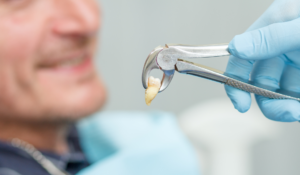
You had a tooth pulled, and now you are in the mirror trying to decide whether what you see staring back is normal. The color looks strange. There might be something white where the tooth used to be. You cannot quite tell if this is healing or if something has gone wrong.
Take a breath. Almost everything that worries patients at this stage is exactly what healthy recovery is supposed to look like. An extraction site moves through several distinct visual stages over the first couple of weeks, and each one looks different from the last. The trouble is that no one explains those stages ahead of time, so you are left guessing. That gap matters because patients who cannot tell normal healing from a real complication tend to either brush off a warning sign that deserves attention or panic over a recovery that is going perfectly fine.
Here is what to keep in mind as you read.
Key takeaways
- A healthy extraction site changes appearance significantly over the first 1-2 weeks
- A dark red or maroon blood clot forming within the first 24 hours is the first sign of healthy healing
- White or cream-colored tissue appearing after a few days is granulation tissue
- Dry socket happens when the blood clot is lost, exposing bone
- Most extraction sites are fully closed at the surface within 2 weeks. Complete bone healing takes 3-6 months.
What Does a Healing Tooth Extraction Look Like Day by Day?
Recovery follows a steady, predictable path, and the easiest way to stop worrying is to know what each stage should look like. Here is what a normal extraction site looks and feels like as the days pass.
| Timeframe | What You Should See | What’s Normal to Feel |
|---|---|---|
| First 24 hours | Dark red or maroon blood clot filling the socket, some swelling and redness around the site | Bleeding that slows with gauze pressure, mild to moderate pain, swelling beginning |
| Days 2–3 | Clot darkens, swelling peaks, site may look bruised | Peak swelling and discomfort, some jaw stiffness |
| Days 3–5 | White or cream-colored tissue begins forming over the clot | Discomfort should begin easing; tenderness around the site is normal |
| Days 7–10 | White/pink granulation tissue fills most of the socket, edges of gum begin closing inward | Mild tenderness; significant pain at this stage is not normal |
| Week 2 | Gum tissue largely closed over the socket surface | Site should feel mostly normal; some sensitivity possible |
| 3–6 months | Underlying bone fully remodels and fills the socket | No discomfort expected |
One stage trips up almost everyone. Around days three to five, a white or cream-colored layer starts to form over the clot. It can look like something has gone wrong, but it is actually one of the clearest signs your mouth is healing the way it should.
Learn more about Bergen Oral Surgery’s post-op instructions following an extraction.
What Is the White Stuff in My Extraction Site?
If you notice white, cream, or pale yellow tissue forming over the socket around days three to five, that is granulation tissue, and it is a sign of healthy healing rather than infection.
- Granulation tissue is new connective tissue and blood vessels that grow in to fill and protect the socket.
- It looks white, cream, or slightly yellow and has a soft, moist texture.
- It is not pus, it is not discharge, and it does not point to an infection.
- Infected tissue looks and smells noticeably different. A foul odor, spreading redness, and a fever are the signs that usually come with a true infection.
Read more about Why Your Dentist Sent You to an Oral Surgeon for a Tooth Extraction.
What Does a Healthy Blood Clot Look Like After a Tooth Extraction?
A healthy blood clot looks dark red to maroon, fills the socket, and has a slightly gel-like surface. It forms within the first few hours after your extraction and does most of the heavy lifting in your recovery.
- The clot is the foundation of the entire healing process. It protects the underlying bone and nerve while new tissue grows in.
- The color ranges from dark red to nearly black as it matures, which is completely normal.
- It should fill the socket fully rather than sit on top of it.
- A little oozing around the clot during the first 24 hours is normal, but bleeding that repeatedly soaks through your gauze is not.
What Happens If the Blood Clot Falls Out?
If the blood clot is dislodged, the underlying bone and nerve become exposed. That is a dry socket, and it needs prompt treatment.
- Call your oral surgeon the same day if you think the clot is gone. Bergen offers same-day emergency care for exactly this kind of situation.
- Do not try to replace or cover it yourself.
- The signs the clot is gone include sudden, sharp pain that radiates toward your eye or ear, a visibly empty socket with exposed bone, and a bad taste or odor.
How Do You Tell the Difference Between Dry Socket and Normal Healing?
When you are not sure whether your recovery is on track, this quick comparison helps you tell normal healing from a dry socket at a glance.
| Normal Healing | Dry Socket | |
|---|---|---|
| Pain pattern | Peaks around days 2–3, then gradually improves | Worsens after day 3, sharp and radiating |
| Appearance | Dry clot present, white granulation tissue forming | Empty-looking socket, may show exposed bone |
| Odor | None | Foul or unpleasant taste and odor |
| Color | Dark red clot, then white or pink granulation tissue | Gray, yellow, or visibly empty |
| When it occurs | Expected part of recovery | Typically days 2–4 after extraction |
| What to do | Continue normal aftercare | Call your oral surgeon immediately |
If anything about your healing looks or feels off and you cannot tell which column you are in, do not try to guess. Call Bergen Oral & Maxillofacial Surgery and let the team take a look.
What Are the Signs That a Tooth Extraction Is Not Healing Properly?
Most healing goes exactly the way it should, but a few signs are worth a call. Reach out to your oral surgeon or the team at Bergen if you notice any of these.
- Pain that worsens after day 3 instead of improving
- A fever above 101°F
- Swelling that increases after day 3
- A foul taste or odor that does not clear up with saltwater rinses
- Visible exposed bone in the socket
- Numbness or tingling that lasts well beyond the expected anesthesia window
- Heavy bleeding you cannot control with gauze after 30 to 45 minutes of firm pressure
When you catch any of these early, you keep a small issue from turning into a bigger one.
If you had a wisdom tooth extraction, learn more about Recovery for a Smooth, Comfortable Healing Process.
How to Support Healthy Tooth Extraction Healing
The single most important thing you can do is protect that blood clot, especially during the first 72 hours. A few simple habits make a real difference.
- No smoking or vaping for at least 72 hours
- No straws for the first 72 hours
- No forceful rinsing for the first 24 hours
- Gentle saltwater rinses starting on day 2
- Soft foods only for the first several days
- Keep your head elevated when you sleep for the first night or two
- Take any prescribed medications exactly as directed
Follow these for the first few days and you give the site the best possible chance to heal cleanly.
Read more about Smoking & Vaping After Wisdom Teeth Removal.
Normal Healing Follows a Pattern, and Knowing It Puts You in Control
Healthy extraction healing follows a predictable path — a dark clot forms first, white granulation tissue appears within days, and the gum gradually closes. Most of what worries patients is completely normal. Following your post-op instructions and knowing what to expect helps you heal faster and avoid unnecessary complications.
If something doesn’t look right, Bergen Oral & Maxillofacial Surgery has served Bergen County and surrounding communities, including Rockland County, NY, for more than 70 years. Their dual-degree surgeons are trained in both medicine and dentistry, backed by over 2,000 Google reviews and four convenient locations.
Doctor-Owned. Doctor-Directed. Patient-Centered Care You Can Trust.
Tooth Extraction (FAQs)
What does a normal tooth extraction socket look like?
For the first 24 to 48 hours, a healthy socket holds a dark red blood clot, which gives way to white or cream-colored granulation tissue by days three to five. The gum around it may look slightly swollen and pink, and the socket slowly closes from the edges inward over one to two weeks.
What does dry socket look like vs. normal healing?
Normal healing shows a dark clot that turns into white granulation tissue. A dry socket looks empty or grayish, may expose bone, gives off a foul odor, and brings radiating pain that gets worse instead of better.
Is white stuff in my extraction site normal?
Yes. White or cream-colored tissue that appears three to five days after extraction is granulation tissue, the new connective tissue that grows in to fill and protect the socket. It is a sign of healthy healing.
How long does tooth extraction healing take?
The gum surface closes within one to two weeks for most patients, while complete bone healing and socket remodeling take three to six months. Your pain and visible healing should improve steadily after the first three days.
Helpful Links
Continue Reading
- What Age Do Wisdom Teeth Come In?
- Local Anesthesia, Sedation, or General Anesthesia?
- Dental Implants vs. Veneers