What Is a CO2 Laser and What Does It Treat? A Guide for NJ Patients
Key Takeaways:
- A CO2 laser uses light energy that water in your tissue absorbs, allowing it to remove ultra-thin layers with precision while sealing small blood vessels and nerve endings as it works.
- At Bergen Oral & Maxillofacial Surgery, the DEKA® CO2 laser is used for facial skin resurfacing, lip and tongue-tie release (frenectomy), and QuietNite® snoring therapy.
- Recovery depends on how deeply the laser treats: lighter sessions often mean little downtime, while deeper skin resurfacing can call for a week or more of healing.
- Loud snoring with breathing pauses, gasping, or daytime exhaustion can signal sleep apnea and deserves a medical evaluation before choosing any snoring treatment.
- In North Jersey, CARE® Esthetics laser treatments are offered at Bergen’s Paramus office, within a physician-owned practice guided by board-certified oral and maxillofacial surgeons.
If you’ve heard a friend rave about a “CO2 laser” for their skin, or your child’s pediatrician mentioned a tongue-tie, it’s completely normal to wonder what this laser actually is and whether it could help you. The answer covers more ground than most people expect, from smoother skin to easier tongue movement to quieter nights, and North Jersey patients can find all three close to home.
What Is a CO2 Laser and How Does It Work?
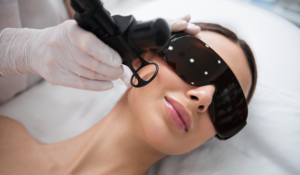
A CO2 laser is a medical laser that produces an invisible beam of infrared light that water absorbs very readily. Because skin and the soft tissues of the mouth are mostly water, the beam can vaporize extremely thin, controlled layers of tissue with remarkable precision.
As it works, the laser’s energy also seals tiny blood vessels and nerve endings. That’s why CO2 procedures in the mouth often involve very little bleeding and frequently don’t require stitches. On the skin, that same controlled energy removes damaged surface cells and signals your body to build fresh collagen underneath.
The CO2 laser was actually born right here in the Garden State: physicist Kumar Patel invented it in 1964 at Bell Labs in New Jersey. Today, at our Paramus office, Bergen uses the DEKA® CO2 laser, a platform trusted by providers in more than 120 countries and backed by over 40 years of laser innovation.
Fractional Vs. Fully Ablative: Why the Setting Matters
“Ablative” simply means the laser removes tissue, and how much it removes shapes both your results and your recovery. According to the Mayo Clinic, fractional treatments typically need two to four sessions for noticeable results, while a fully ablative treatment goes deeper in a single visit.
| Approach | How It Works | What to Expect |
|---|---|---|
| Fully ablative resurfacing | Removes the entire outer layer of skin across the treated area | The most dramatic change in one session, with the longest healing time |
| Fractional ablative resurfacing | Treats thousands of tiny columns, leaving untouched skin in between to speed healing | A shorter recovery, often delivered as a series of sessions |
| Soft-tissue settings in the mouth | Precisely releases or tightens oral tissue, such as a frenum or the soft palate | Quick in-office procedures with minimal bleeding |
What Does a CO2 Laser Treat? Skin, Oral Tissue, and Airway Concerns
Through the CARE® Esthetics services in Paramus, the CO2 laser treats three main areas: facial skin concerns like wrinkles and scars, tight lip and tongue ties, and snoring caused by relaxed tissue in the back of the mouth.
| Concern | How the CO2 Laser Helps | Typical Treatment |
|---|---|---|
| Fine lines, acne scars, uneven tone, and rough texture | Resurfaces the outer skin and stimulates new, elastic collagen beneath it | Sessions often take 10 to 30 minutes, usually over one to four visits about a month apart |
| Lip and tongue ties | Releases tight frenum tissue while sealing blood vessels and nerve endings | A brief in-office procedure; stitches often aren’t needed |
| Snoring from relaxed soft palate tissue | Gently heats tissue to stimulate collagen and tighten the airway | Sessions often take 10 to 30 minutes, with normal eating and activity right away |
CO2 Laser Skin Resurfacing for Wrinkles, Scars, and Sun Damage
CO2 laser resurfacing removes the damaged outer layer of skin and prompts your body to produce fresh collagen, which can soften lines and refine texture over the weeks and months that follow. It’s an especially good fit for North Jersey patients carrying the effects of years of Jersey Shore summers. Facial and under-eye laser resurfacing at Bergen can help patients who want to:
- Soften fine lines and wrinkles around the eyes, mouth, and forehead
- Diminish the appearance of acne scars
- Even out skin tone and sun-related discoloration
- Minimize enlarged pores and rough texture
It’s just as important to know what a laser can’t do. The Mayo Clinic notes that laser resurfacing cannot eliminate excess or sagging skin. If that’s your main concern, our surgeons can talk with you about whether facial implants, facial bone recontouring, or other facial surgery options might be a better fit.
Laser treatments can also be paired with platelet-rich fibrin (PRF), a concentrate made from your own blood. A topical PRF add-on applied after treatment is designed to support healing and boost rejuvenation using your body’s natural repair processes.
Related Reading: How PRF Supports Healing After All-on-4 Surgery and Facial Esthetic Treatments
Laser Tongue-tie and Lip-tie Release (frenectomy)
A frenectomy releases a frenum, the small band of tissue that connects the lip or tongue to the mouth, when it’s too tight. With a CO2 laser, the tissue can be released in seconds, with minimal bleeding and often no need for stitches.
Lip and tongue ties can affect patients of all ages, and many North Jersey families first hear about them from a pediatrician, dentist, or lactation consultant. Signs worth having evaluated include:
- An infant who struggles to latch or feed efficiently
- A child who has difficulty with certain speech sounds
- Trouble lifting the tongue or sticking it out past the lips
- A lip tie that pulls on the gums or makes teeth hard to keep clean
Published case reports, such as one in the Journal of Lasers in Medical Sciences, describe less bleeding, swelling, and post-operative discomfort with CO2 laser frenectomy. Not every tie needs to be released, though. The decision depends on how the tie affects function, and some patients benefit from working with a lactation consultant or speech therapist alongside treatment.
CO2 Laser Snoring Treatment: How Quietnite® Works
QuietNite® uses gentle CO2 laser energy on the soft palate, tonsils, and tongue to stimulate collagen and tighten tissue, which can improve airflow and reduce snoring. There are no incisions, and patients can eat, drink, and return to normal activities right away.
Is It Snoring or Sleep Apnea? Know the Warning Signs
Snoring on its own can be harmless, but it can also point to obstructive sleep apnea, a medical condition that needs proper diagnosis. The Mayo Clinic recommends seeing a doctor if your snoring comes with:
- Pauses in breathing that a partner has noticed
- Gasping or choking during the night
- Excessive daytime sleepiness, morning headaches, or trouble concentrating
If these sound familiar, mention them during your consultation so you can get the right evaluation, which may include a sleep study, before choosing a snoring treatment.
What to Expect During CO2 Laser Treatment and Recovery
Most patients describe a warm, prickling sensation that’s managed with numbing cream or local anesthetic. Recovery ranges from almost no downtime for lighter and oral treatments to about one to two weeks for deeper skin resurfacing. If you tend to feel nervous at appointments, our team is happy to walk you through every step, and you can find more tips for managing appointment anxiety on our site.
After Facial Resurfacing
Expect a sunburn-like feeling for a few hours, followed by redness, mild swelling, and peeling as new skin comes in. The Cleveland Clinic notes that stronger settings mean a longer recovery. To support healing:
- Follow your provider’s cleansing and moisturizing instructions exactly
- Protect your skin from the sun every day
- Let flaking skin shed on its own rather than picking at it
After Oral Laser Procedures
After a frenectomy or QuietNite® session, most patients return to their routine quickly, with mild soreness that typically eases over a few days. Call us right away if you notice increasing pain or swelling, a fever, bleeding that won’t stop with gentle pressure, or any sign of infection. Our doctors are on call, so you can speak with a doctor any time, and our same-day emergency care is available seven days a week. You can also review our general pre- and post-op instructions.
Who Is a Good Candidate for CO2 Laser Treatment?
Good candidates are generally healthy, have realistic expectations, and can commit to aftercare and sun protection. Be sure to mention it if you:
- Have a history of cold sores, since treatment around the mouth can trigger a flare
- Have taken isotretinoin (an acne medication) within the past year
- Have a darker skin tone or a recent tan, which can raise the risk of pigment changes
- Tend to form raised or keloid scars
- Are pregnant or breastfeeding, or have a condition that affects healing
None of these automatically rules you out. They simply help your provider choose the safest approach for you. And if you’ve noticed an unusual sore, patch, or lump in your mouth, that calls for a different kind of exam; learn more about oral pathology evaluations with our surgeons.
Why NJ Patients Choose Bergen Oral & Maxillofacial Surgery
At Bergen, your laser treatment happens inside a physician-owned surgical practice that has cared for NJ families for more than 70 years.
- Surgeon-guided care. Bergen is the only oral surgery practice in Bergen County with dual-degree oral and maxillofacial surgeons. Our surgeons are board certified, meaning they completed an accredited residency, passed rigorous written and oral examinations, and keep up with ongoing standards.
- An experienced esthetic provider. CARE® Esthetics treatments are performed by Amy Bhagat, RN, BSN – MSN-FNP-BC, who has advanced training in laser treatments, microneedling, and PRF therapies.
- People first, always. We take time to answer every question and follow up after your treatment, which is why so many patients share their experiences in our patient reviews.
- Close to home. CARE® Esthetics is offered at our Paramus office on From Road, within easy reach of Bergen, Passaic, Essex, and Hudson Counties and Rockland County, NY. Take a virtual tour of our Paramus office or see all four North Jersey locations. We’re open six days a week.
- Clear costs before treatment. Our billing team explains costs up front, and CareCredit financing is available to help spread out the cost. Learn more on our financial policy page.
Ready to explore your options? Our new patient page explains what to expect at your first visit, or you can book a CARE® Esthetics appointment online or call (201) 477-2667.
Your CO2 Laser Consultation Is Closer to Home Than You Think
Whether you’re hoping to soften fine lines, help your child move their tongue more freely, or get a quieter night’s sleep, a CO2 laser offers a precise, minimally invasive way to get there. At Bergen Oral & Maxillofacial Surgery, North Jersey patients get that care from a surgeon-guided team with more than 70 years in the community, a convenient Paramus office, a comfortable experience built around you, and a clear picture of your costs before treatment begins.Book an appointment for your free consultation, and enjoy 10% off your first treatment.
Curious Whether CO2 Laser Treatment Is Right for You?
Call or text CARE Esthetics at Bergen Oral & Maxillofacial Surgery at (201) 477-2667 to schedule a consultation.
Doctor-Owned. Doctor-Directed. Patient-Centered Care You Can Trust.
Doctor-Owned. Doctor-Directed. Patient-Centered Care You Can Trust.
CO2 Laser FAQs
How Long Do CO2 Laser Results Last?
Skin resurfacing results can last for years, though your skin will continue to age naturally. Daily sun protection helps you keep your results longer. Snoring improvements may soften over time and can be refreshed with touch-up sessions, while a frenectomy is intended to be a lasting release.
Does Insurance Cover CO2 Laser Treatment?
Cosmetic treatments like skin resurfacing are generally not covered by insurance, while coverage for a functional frenectomy varies by plan. Our billing team can review your insurance benefits and explain any out-of-pocket costs before treatment.
Can I Combine a CO2 Laser With Botox® Cosmetic or Fillers?
Yes, many patients do. A laser improves skin texture and tone, while BOTOX® Cosmetic relaxes the muscles behind expression lines, so the two often complement each other. Your provider will plan the timing between treatments.
Is a CO2 Laser the Same As a Chemical Peel?
No. Both resurface the skin, but a chemical peel uses an acid solution, while a CO2 laser uses light energy that can be adjusted to precise depths. The right choice depends on your skin concerns, skin type, and how much downtime you’re comfortable with.
What Is the Best Time of Year for CO2 Laser Resurfacing in New Jersey?
In New Jersey, fall and winter are popular seasons for laser resurfacing. Scheduling after the summer shore season and well before spring gives your skin time to heal while the days are shorter. With less time in the sun, it’s easier to protect healing skin, which supports a smoother recovery and lowers the risk of pigment changes.